What’s the Deal with Alleys in Atlanta?
A Friendly Primer from a Grant Park Real Estate Agent Who Has Seen A Few Things
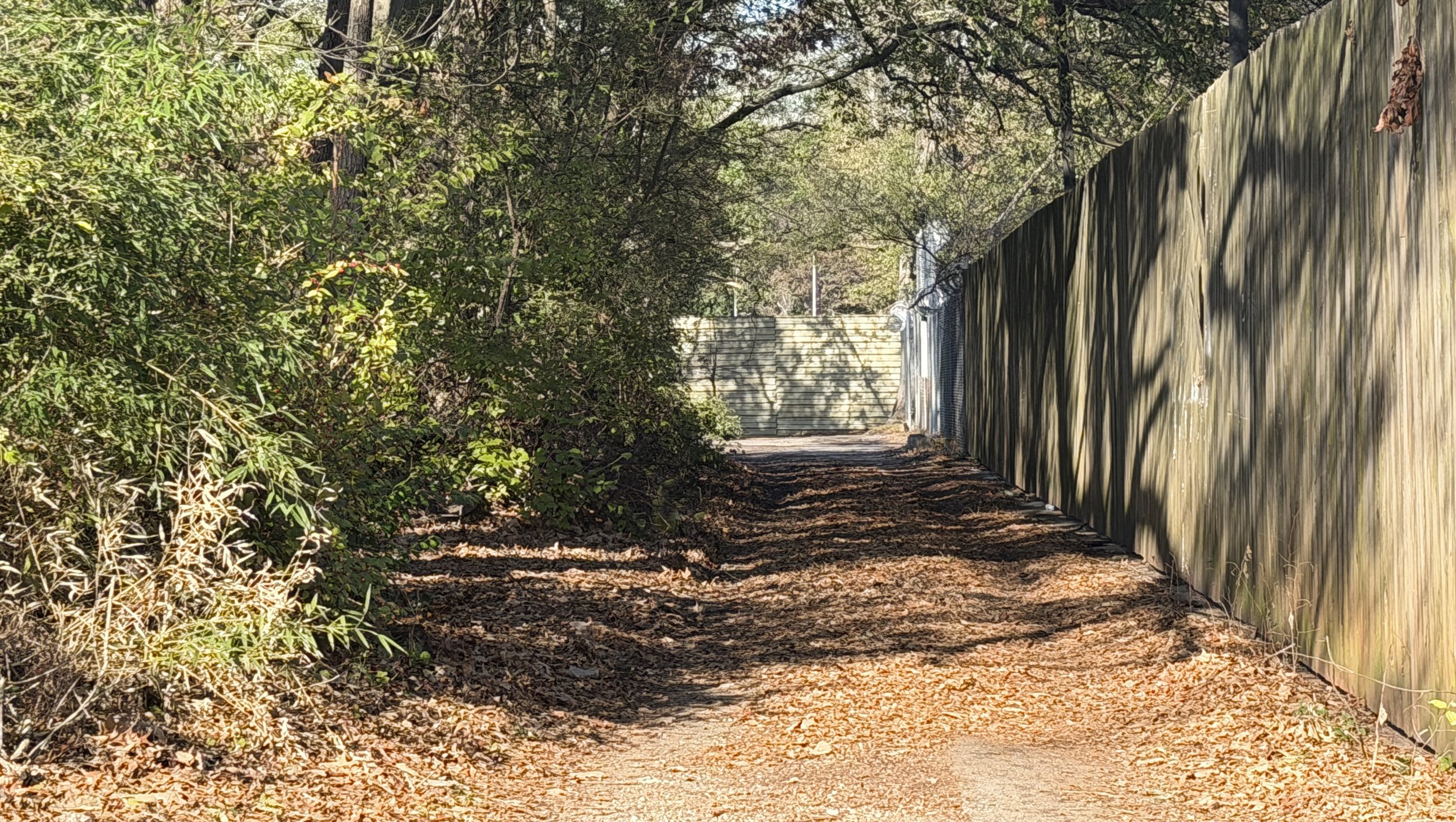
If you live in an older Atlanta neighborhood or you are thinking of buying or selling here, you have probably spotted a narrow strip of land behind someone’s fence and thought, Now what on earth is that about?
Congratulations. You have discovered the quiet backstage of historic Atlanta: the alleys.
I have lived in these neighborhoods for more than twenty-five years as a homeowner, renovator, and real estate agent. I am not an attorney or a land use expert. I am simply someone who has spent a quarter-century walking clients to the back of houses saying, “Here is the alley. Yes, it is still a thing. No, the city does not want to talk about it.”
This article pulls together what I have learned, what I have seen neighbors go through, and what I have gathered from real estate attorneys. The goal is to give you a practical working knowledge of how alleys function in Atlanta. Not to make you an expert. Just to help you feel less mystified when you see one.
And if you ever have a concern about the alley next to your house, I am always happy to help you get to the right professional. Trust me, once you start dealing with alleys, you will want the right people on speed dial.
A Short History of Atlanta Alleys
In the late 1800s and early 1900s, Atlanta's business districts were designed with alleys behind commercial buildings. Delivery carts brought produce, coal, and goods to the back doors while customers enjoyed a clean, uncluttered front. When residential neighborhoods like Grant Park and Inman Park were developed, the same concept followed.
Milk wagons, coal deliveries, and garbage collection all happened in alleys. A ten-foot alley might serve a dozen houses. A twenty-foot alley might run continuously for blocks with enough room for two carts to pass each other. Think of it as an early version of Amazon Prime, only with horses, clanging metal bins, and a lot more mud.
Then the car came along. Coal deliveries stopped. Garbage wagons turned into garbage trucks. People started parking in front of their homes to show off their shiny new automobiles. The alleys, most of which were never paved, fell out of use. Eventually the city decided it no longer wanted to maintain them.
And this is where things get interesting.
Who Owns the Alley? The Mystery Continues
When the city abandoned maintenance in the 1970s (except for three downtown alleys), it seemed to abandon any ownership claim too. The city now treats alleys as the private responsibility of the adjoining property owners.
But here is the fun part. There is almost no documentation confirming who technically owns what. Written property deeds may mention alleys as a point of reference in the legal description of a property, but you’ll rarely see an assertion of ownership. Plats and maps do not suggest ownership or usage rights. And the City of Atlanta Municipal Code does not clarify any of this.
If you ever ask me who owns the alleys in Grant Park, I will usually say, “The heirs and assigns of Lemuel Pratt Grant, whoever and wherever they are.” Then I laugh. Then I remind you that no one has ever produced a document to back this up.
How the City Treats Alleys Today
Even though the city does not claim ownership of most alleys, it does use a basic assumption for planning and permitting purposes.
If your property touches an alley, the city often considers your “rights” to extend to the midpoint of that alley. This does not mean you own the land in a full fee simple manner. It simply means that when you apply for permits or talk about building setbacks, the city may allow you to count half the alley as part of the buffer.
For example, in Grant Park, almost every residential lot is zoned R5, which dictates side and rear yard setbacks for new construction (i.e., a new home, addition to your historic home, or garage/ADU) to be seven feet. If your home borders a ten-foot alley, the city may let you count five of those feet toward the setback. That means you could place a structure two feet from your actual property line as long as the structure does not encroach into the alley. And of course if the alley is 15 feet wide or 20 feet wide, then your entire setback could be absorbed by the alley, allowing you to potentially build to the property line.
This is one of the most common reasons homeowners get curious about alleys. A reduced setback can be a game changer when determining where, exactly, on your property you intend to situate an addition, garage, permanent shed, ADU, retaining wall or fence.
Maintenance: The City’s Favorite Topic to Avoid
If you call the city to ask about fixing potholes in an alley, the conversation usually ends quickly. City councilmembers, Public Works staff, zoning employees, all of them will happily move you along. The alley is yours to maintain.
Each adjoining property owner is responsible for maintaining the half of the alley that borders their land. Many neighbors pool resources. When I moved to Grant Park, everyone along our block kept an informal escrow fund. Every decade we regraded and regraveled the alley. It worked because everyone benefitted. Also because no one wanted to drive through six inches of red clay after a storm.
Can You Block the Alley? Plant a Tree? Build a Shed? Extend a Fence?
Short answer: you can attempt it. Your neighbors might challenge it. The results may surprise you.
Alley disputes in Atlanta have led to mixed outcomes in court. In one case a homeowner had to move a fence and a shed back to the true property line because the neighbors relied on the alley for access. In another case a different homeowner planted a tree in the middle of what they believed was “their half” of the alley. Neighbors challenged it. The homeowner won and the tree stayed.
The lesson here is simple. If you want to make permanent changes to an alley, talk to a real estate attorney. And talk to your neighbors. That second part is sometimes harder.
Shared Easements: When You Want Certainty
If you live next to an alley and want long-term protection from future disputes, some neighbors choose to work with a real estate attorney to create a recorded easement agreement very similar to a “shared driveway” agreement. This gives everyone written legal rights to use the alley for ingress and egress and prevents anyone from blocking it in the future.
It is one of the few ways to create true clarity, but it requires everyone to agree. Getting five or ten households aligned on anything is hard enough. Getting them aligned about dirt and gravel behind their homes is a special skill. Successful campaigns for elected office have started on less.
What If You Want to Reopen an Overgrown Alley?
If the alley exists on the official plat but has become impassable, the best path forward is teamwork. That means finding common ground with your neighbors and creating a plan that benefits everyone.
If a neighbor worries about cars coming and going behind their home, you will need to present a strong case for why reopening the alley serves shared interests. If trees have grown within the alley, the city often views the nearest property owner as responsible for removal. That includes costs and recompense. This is where people often rethink the plan after the first estimate from an arborist.
And if you discover that three or four neighbors have slowly moved fences into the alley over the last fifty years, take a deep breath. You are entering a long negotiation. Proceed with patience and strong coffee.
What About Gaining True Ownership of the Alley?
To absorb part of an alley into your property, you and all adjoining neighbors would need to agree to officially close it. Everyone would need to meet with an attorney. You would have to create new legal descriptions for each lot, revise multiple deeds, and file them with the city' of Atlanta’s Department of City Planning, Office of Zoning & Development (OZD).
You cannot unilaterally take your “half” even if the city uses that midpoint for setback calculations. True ownership requires a formal legal process and unanimous buy-in from every neighbor relying on the alley. For most people, this becomes more trouble than it is worth.
First Step for Any Alley Question: Get a Survey
If you are next to an alley and thinking about setbacks, access, fencing, or reactivation, the first step is clear. Hire a licensed Georgia land surveyor. Have them mark the width and show the alley on your survey.
Everyone you deal with will ask for it. Builders. Architects. Fence contractors. Zoning reviewers. It is the single most useful document you can have when dealing with alleys.
Other Helpful Tools
City of Atlanta GIS Map Service, “Property Information”: https://gis.atlantaga.gov/propinfo/ You will see alleys as thin strips between parcels (they look like narrow “roads” and are unnamed). Keep in mind these lines represent tax parcels, not always exact survey boundaries.
LandGlide App: Downloadable from the Apple or Android app store for $99/year, this app lets you see tax parcel borders and walk property lines in real time on site. You will see the same thin strips between parcels representing the alleys. Again, use it as a guide, not a survey.
Before We Get to the Municipal Code
A final reminder. Every situation is unique. If you think a neighbor is using the alley improperly, or you want to improve or reopen an alley, talk with a real estate attorney first. And feel free to call me. I will listen to what is going on and point you to the right professional. After years of working in Grant Park, Cabbagetown, Ormewood Park, and East Atlanta, I have seen enough alley stories to know when someone needs backup.
City of Atlanta Municipal Code (Word for Word)
Sec. 138-5. - Alleys.
(a) The city is not and shall not be responsible for the maintenance of alleys, with the exception of three alleys (sometimes referred to as "public alleys") which have been historically maintained by the city. These three alleys are located in the central business district, connect major thoroughfares, are paved, and serve general transportation and public purpose. The alleys thus excepted are:
1. Mortgage Place, N.W., from Carnegie Way to Ellis Street.
2. Equitable Place, N.E., from Auburn Avenue to Edgewood Avenue.
3. Cain Place, N.W., from International Boulevard to Harris Street.
(b) The city has no interest in, and shall not be responsible for any other alley within the city limits. Public service vehicles such as garbage trucks, fire safety vehicles, or police vehicles may make use of alleys in the provision of their service. However, none of these or other historic or present uses shall constitute public ownership of, interest in, or responsibility for said alleys.
(c) The city shall not maintain or improve any private alley provided however the city is an abutting property owner or the alley serves as access to a city facility.
(d) When the city shall need to acquire real property, right-of-way, or, easements within an alley, the city has and will, barring evidence to the contrary, assume the centerline of the alley to be the property line between abutting private properties, and shall consider the area within the alley to belong in equal proportions to the abutting property owners. Calculations as to the value of such property or property rights to be acquired shall be made accordingly.